University of Applied Sciences Northwestern Switzerland Academy of Art and Design, Basel Fall 2024, Critical Publishing II Monday 08:45—16:30 Bérénice Serra [she/her] ↗ berenice.serra@fhnw.com
Over the last ten years or so, we have witnessed a new phase in the evolution of publishing, which transcends the dichotomy between the production of paper and digital publications. In this transition, graphic designers, publishers and artists, as well as readers and users, are implementing new strategies for the production, distribution and social organization of publishing activity. In this course, we will shed light on the most contemporary challenges that the activity of publishing in the 21st century must address, through an exploration of emerging publication infrastructures, online publishing theories (editorialization), and new social publishing practices. The course will revolve around technical learning, experimentation sessions, and the exploration of examples from artists and designers who have experimented with these new strategies. Students will have the opportunity to reflect on their own online and offline publishing practices, to explore various methods of dissemination and to evaluate how these different ways of making things public can influence the reception and impact of their content. Final ProjectProduce a manifesto for publishing in the twenty-first century.
September, 20 00 — Women in Wikipedia (13:00 - 17:00)
The workshop accompanies the exhibition *Rid the Grid*. — Rid the Grid Women in Swiss Graphic Design 1900–1980 In the history of Swiss graphic design, there have been numerous female graphic designers who have successfully run their own studios and worked for well-known clients since the beginning of the 20th century. However, a glance at the history books shows that most of these female graphic designers fell through the cracks of design historiography, they didn’t fit into the “history grid”. Since their works were not included in the design canon, many names and biographies have been forgotten today. The exhibition therefore takes a new look at the history of famous Swiss graphic design. It shows the versatility in the work of women graphic designers between 1900 and 1980 through posters, editorial design, illustrations, and other graphic artifacts. Among the designers are Helene Haasbauer-Wallrath, Ursula Hiestand, Lora Lamm, Warja Lavater, Frieda Meier-Allenbach, Therese Moll, Nelly Rudin, Rosmarie Tissi and many more. An exhibition by Basel Poster Collection and Basel Academy of Art and Design in cooperation with Schürch & Koellreuter Basel Thursday, September 19 till Sunday, October 6, 2024 Basel Poster Collection, Exhibition Space Freilager-Platz 4 4142 Münchenstein Switzerland
September, 23 01 — History and Theory of Publishing
↗ PAD for today Review Syllabus Review Wikipedia Workshop Lecture: 1.1 Publishing. A brief history (60 min) Reading: This will kill that, Notre-Dame de Paris, Victor Hugo, 1831. lunch break Discussion about the text Lecture: 1.2 Information Technology (60 min) Exercice 01: Reflect on how it resonates with your experience. Reflect on your own publishing practice(s). The last two hours of the class is dedicated to work on your own project. For next class Read and comment one of the manifestos (see guidelines) Guidelines 1. Introduce and situate the manifesto/ issue/ movement/ organisation/ author(s). 2. What received ideas, conventions, principles, values, forms, etc. does it challenge; and what are its core proposals? 3. How is the manifesto structured? 4. How would you characterise the style of the writing (e.g. ingenious, innovative, poetic, formal, etc.)? and the tone of the prose (e.g. infuriated, scathing, sarcastic, passionate, humorous, frivolous, reasoned, controlled, etc.) ? 5. Was this manifesto influential at the time it was produced, and is it still relevant today?
October, 7 02 — Publishing Manifestos and Ecosystems
↗ PAD for today Presentations by the students (5-10 min each) Reading: Notes Toward a Publishing Practice, Archive Book, 2019. lunch break Discussion about the text Lecture: 2.1 Making things public (60 min) Exercice 02: Identify specific points that stimulate your curiosity, in what we've seen this morning. The last two hours of the class is dedicated to work on your own project. For next class Prepare questions based on the material given by Lucile Haute. Manifestos 1926 — The Future of the Book, El Lissitzky 1946 — On the Cult of Books, Jorge Luis Borges >>>>> Presentation by Ana Maria 1967 — Notice, Stephen Willats 1975 — The New Art of Making Books, Ulises Carrion >>>>> Presentation by Zheye 1976 — Idea Poll, Art-Rite n°14 1989 — Books/Catalogs/Designed Books, Lawrence Weiner 1991 — Riot Grrrl Manifesto, RiotGrrrl 1992 — The Book as Machine, bpNichol, Steve McCaffery >>>>> Presentation by Janice 1999 — memento, TIQQUN 2000 — The Super Flat Manifesto, Takashi Murakami >>>>> Presentation by Andrea 2001 — Corrections and Clarifications, Anita Di Bianco 2002 — Dispersion, Seth Price >>>>> Presentation by Mike 2008 — Introduction, Bruce LaBruce 2011 — Monotone Manifesto, Eric Watier 2012 — Post-Digital Print, Alessandro Ludovico 2019 — Notes Toward a Publishing Practice, Archive Books 2019 — Yoda Press Manifesto, Arpita Das >>>>> Presentation by Sarah
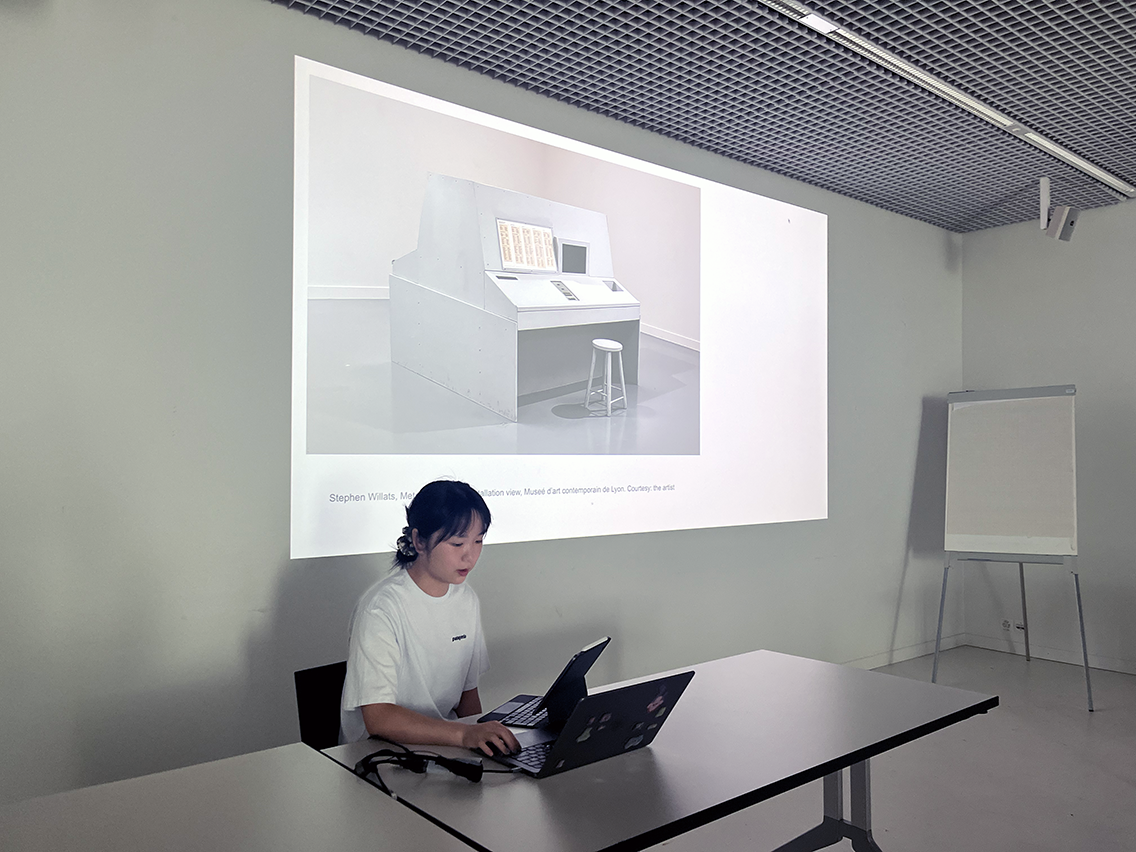 Presentation of Stephen Willats' Manifesto, by Yiran (2023-2024)
October, 14 03 — Workshop about your Manifesto
↗ PAD for today Discussion with artist and editor Lucile Haute, by Zoom at 10:00 (60 min) Exercise 03: In groups, present your manifesto ideas to your classmates Exercice 04: Refine your idea. What is the purpose of your Manifesto? What is the critical edge? To whom is it addressed? What form should your Manifesto take and why? lunch break Exercice 05: Define how your manifesto will be disseminated? Newsletter? Website? Flyers? Social media? Airdrop? Voicemail? Pigeons? Performance lecture? The afternoon is dedicated to work on your own project. For next class Produce a first draft of your own Publishing Manifesto (words, ideas, images, etc.) Links Lucile Haute 01. "Electronic Books and Digital Illusions", Lucile Haute, published in Back Office. 02. "Cyberwitches Manifesto", Lucile Haute, available in French, English and German. 03. "From Bits to Paper, presentation of the series", Les presses du réel, 2018. 04. Pre Post Print website
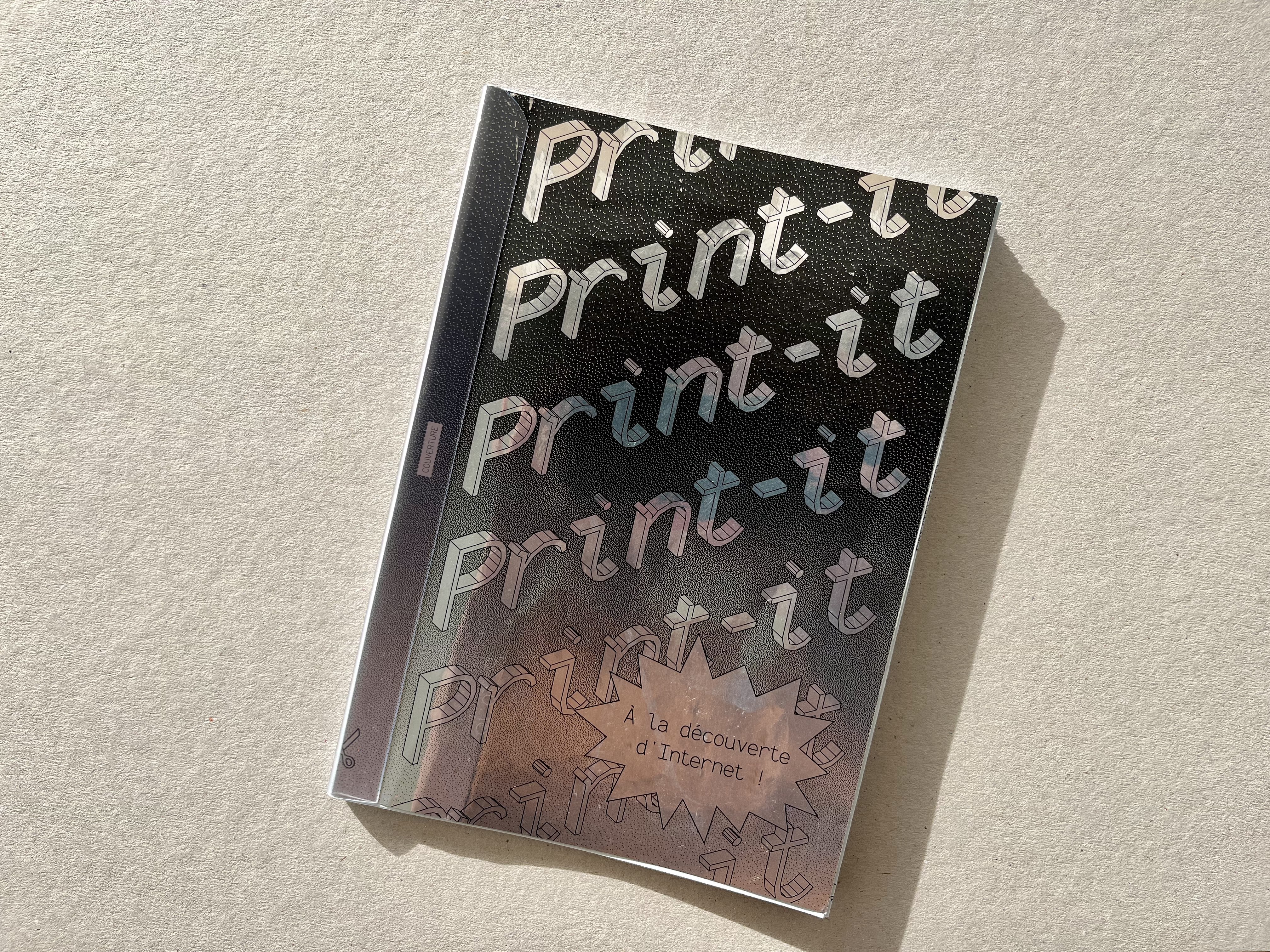 Printing and binding of the web-to-print magazine "Print-it"
October, 21 04 — Intense work on Manifesto
↗ PAD for today Discussions in groups, based on the drafts you've produced. DISCUSSION 01 / 9:00 to 10:30 DISCUSSION 02 / 11:00 to 12:30 DISCUSSION 03 / 14:00 to 15:30 Exercise 06: Each student presents their draft to the group. During this presentation, the other group members should take notes and prepare to offer feedback about the clarity of the idea/topic, the originality and relevance to the theme of publishing in the 21st century, the strength of argumentation or vision, the draft design and adequation with the dissemination strategy. Exercise 07: While giving feedbacks on a project, please ask questions to help your classmate clarify and rethink certain ideas. Offer concrete suggestions about the text or the tangible output format. Identify any key ideas that might be missing from the draft. For next class Prepare the final version of your manifesto based on the feedback you got during the collective discussion.
October, 28 05 — Revealing the Manifestos
↗ PAD for today Presentations by the students (10 min + 5 min for questions) 9:00-9:15 / Manifesto 01 9:15-9:30 / Manifesto 02 9:30-9:45 / Manifesto 03 9:45-10:00 / Manifesto 04 10:00-10:15 / Manifesto 05 10:15-10:30 / Manifesto 06 10:30-11:00 / break 11:00-11:15 / Manifesto 06 11:15-11:30 / Manifesto 07 11:30-11:45 / Manifesto 08 11:45-12:00 / Manifesto 09 lunch break 13:00-13:15 / Manifesto 10 13:15-13:30 / Manifesto 11 13:30-13:45 / Manifesto 12 13:45-14:00 / Manifesto 13 14:00-14:15 / Manifesto 14 14:15-14:30 / Manifesto 15 14:30-15:00 / break 15:00-15:15 / Manifesto 16 15:15-15:30 / Manifesto 17 15:30-15:45 / Manifesto 18 15:45-16:00 / Manifesto 19 Discussion about the class and the Volumes Art Book Fair.
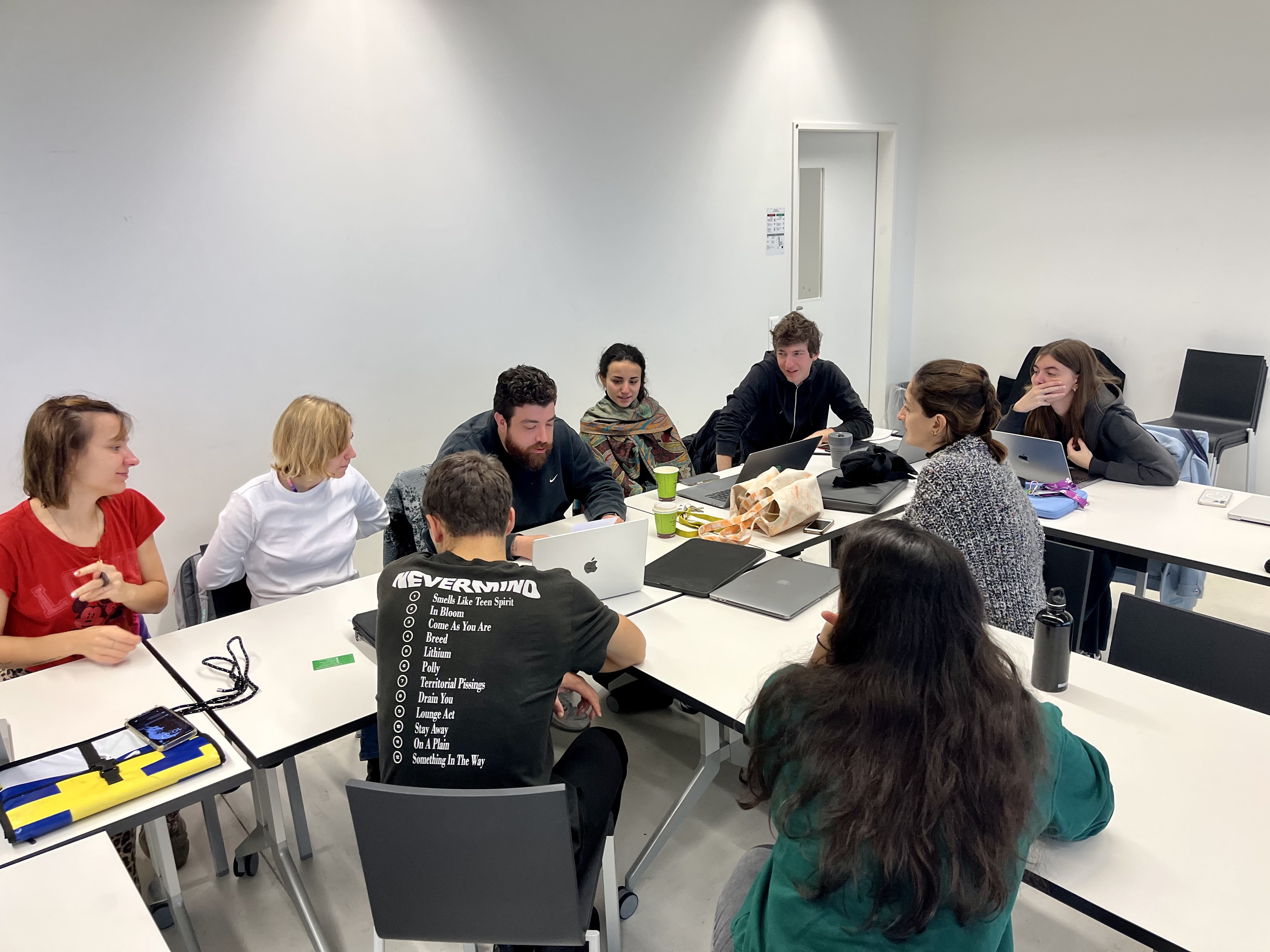 Collective reading of Govi's Manifesto (2023-2024)
November, 16 06 — Volumes Art Publishing Days
Meeting at 11:00 am, Zentralwascherei, Zurich.
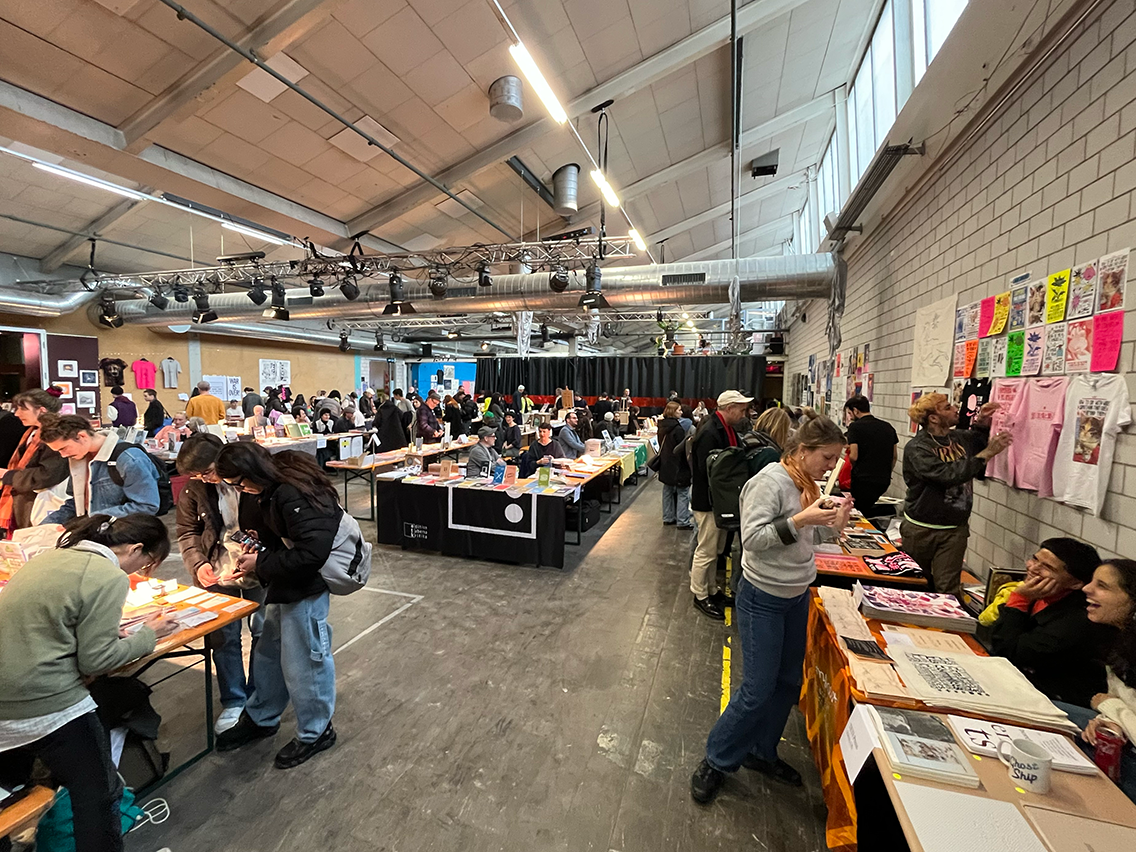 Volumes Art Publishing Days 2024